
Quality Aluminium. Consistent Supply. On-Time Delivery.
Quality Aluminium. Consistent Supply. On-Time Delivery.
Rajendra Tubinox is a leading stainless steel EFW pipes manufacturer in India, offering high-quality Electric Fusion Welded pipes designed for demanding industrial applications. With advanced manufacturing capabilities, strict quality control, and a strong global supply network, we cater to EPC contractors, procurement managers, and industrial buyers across India and international markets.
Our EFW pipes are manufactured using Electric Fusion Welding (EFW) technology, which ensures superior weld integrity, high strength, and excellent corrosion resistance. These pipes are widely used in industries that require large diameter piping, high pressure handling, and long-term reliability.
With ready stock availability and project-based manufacturing, Rajendra Tubinox delivers precision-engineered stainless steel EFW pipes that meet global standards and project specifications.
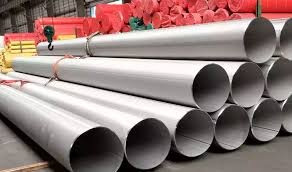
Stainless steel EFW (Electric Fusion Welded) pipes are manufactured by forming stainless steel plates into cylindrical shapes and welding the seam using high-energy electric fusion processes. Unlike conventional welding, EFW uses intense heat without filler material, resulting in a high-quality weld with excellent penetration and strength.
EFW pipes are particularly suitable for large diameter applications and heavy wall thickness requirements, making them ideal for industries such as oil & gas, petrochemicals, power plants, and infrastructure projects.
At Rajendra Tubinox, our EFW pipes are engineered to deliver:
Our pipes are manufactured in compliance with international standards such as ASTM and ASME, ensuring reliability and acceptance in global projects.
| Product Type | Stainless Steel EFW Pipes |
|---|---|
| Material Grades | SS 304/304L, 316/316L, 317L, 904L, 321, 347, 347H, Duplex 2205 |
| Manufacturing Process | Electric Fusion Welding (EFW) |
| Size Range | 1/2" NB to 24" NB |
| Wall Thickness | Schedule 5S to Schedule XXS |
| Length | 6 Meters Standard / Custom Cut Length |
| Surface Finish | Annealed & Pickled, Bright Annealed, Polished |
| Standards | ASTM A312, ASTM A789, ASME SA312, ASME SA789 |
We offer stainless steel EFW pipes in a wide range of sizes suitable for industrial applications.
| Nominal Size (NB) | Outer Diameter (OD) | Thickness Range |
|---|---|---|
| 1/2" – 2" | 21.3 mm – 60.3 mm | Sch 5S – Sch 40S |
| 2.5" – 6" | 73 mm – 168.3 mm | Sch 10S – Sch 80S |
| 8" – 12" | 219 mm – 323.9 mm | Sch 10S – Sch 160 |
| 14" – 24" | 355.6 mm – 609.6 mm | Sch 10S – Sch XXS |
Custom sizes and heavy wall thickness options are available for project-specific requirements.
| Grade | Tensile Strength (MPa) | Yield Strength (MPa) | Elongation (%) |
|---|---|---|---|
| 304 | ≥ 515 | ≥ 205 | ≥ 40 |
| 304L | ≥ 485 | ≥ 170 | ≥ 40 |
| 316 | ≥ 515 | ≥ 205 | ≥ 40 |
| 316L | ≥ 485 | ≥ 170 | ≥ 40 |
| 317L | ≥ 515 | ≥ 205 | ≥ 35 |
| 904L | ≥ 490 | ≥ 220 | ≥ 35 |
| 321 | ≥ 515 | ≥ 205 | ≥ 40 |
| 347 | ≥ 515 | ≥ 205 | ≥ 40 |
| Duplex 2205 | ≥ 620 | ≥ 450 | ≥ 25 |
| Grade | C% | Mn% | Si% | Cr% | Ni% | Mo% | Others |
|---|---|---|---|---|---|---|---|
| 304 | 0.08 | 2.00 | 0.75 | 18–20 | 8–10.5 | - | - |
| 304L | 0.03 | 2.00 | 0.75 | 18–20 | 8–12 | - | - |
| 316 | 0.08 | 2.00 | 0.75 | 16–18 | 10–14 | 2–3 | - |
| 316L | 0.03 | 2.00 | 0.75 | 16–18 | 10–14 | 2–3 | - |
| 317L | 0.03 | 2.00 | 0.75 | 18–20 | 11–15 | 3–4 | - |
| 904L | 0.02 | 2.00 | 1.00 | 19–23 | 23–28 | 4–5 | Cu: 1–2 |
| 321 | 0.08 | 2.00 | 0.75 | 17–19 | 9–12 | - | Ti Stabilized |
| 347 | 0.08 | 2.00 | 0.75 | 17–19 | 9–13 | - | Nb Stabilized |
| Duplex 2205 | 0.03 | 2.00 | 1.00 | 22–23 | 4.5–6.5 | 3–3.5 | N: 0.14–0.20 |
Stainless steel EFW (Electric Fusion Welded) pipes are primarily used in industries that require large diameter piping solutions with high strength and corrosion resistance.
Conclusion:Stainless steel EFW pipes are a reliable solution for industries requiring large-scale, high-performance piping systems with long service life.
Rajendra Tubinox brings years of experience in manufacturing stainless steel EFW pipes that meet international quality standards and project-specific requirements across industries
Rajendra Tubinox supplies stainless steel EFW pipes to industries that require robust piping solutions for large-scale and high-pressure applications.
Looking for a trustedstainless steel EFW pipes manufacturer in India? Rajendra Tubinox offers high-quality EFW pipes designed for large-diameter and heavy-duty industrial applications.
Share your requirement details such as grade, size, thickness, and quantity, and our team will provide a quick quotation along with technical specifications and delivery timeline.
Our team is ready to support your project with accurate pricing and dependable supply.